
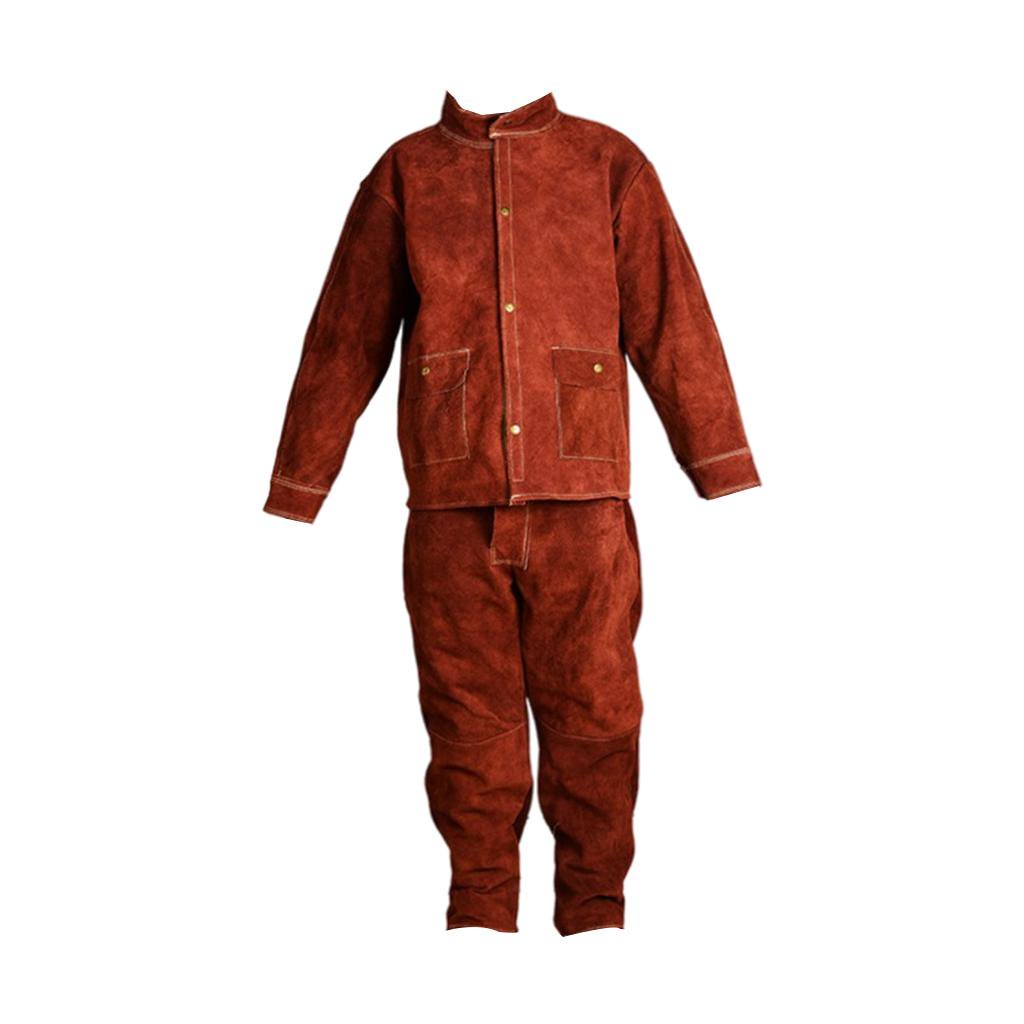
If you import safety gloves or workwear into the European Union, the single most expensive mistake you can make is not the price you negotiated — it is discovering at customs, or worse at a customer audit, that the CE marking on your goods is invalid. A shipment can be held, destroyed, or recalled, and the financial liability sits with the importer, not the factory. This guide explains what CE marking actually means for gloves and workwear, which category your product falls into, what paperwork your manufacturer must hold, and how to verify a certificate in minutes rather than trusting a JPEG on a WhatsApp message.
## What CE Marking Legally Means
CE marking is not a quality award and it is not issued by a government. It is a manufacturer’s declaration that a product meets the applicable EU health and safety requirements, supported by a documented technical assessment. The manufacturer signs a Declaration of Conformity (DoC) and takes legal responsibility for that claim. The marking itself is a self-applied graphic — anyone can print it. That is precisely why importers must audit the evidence behind the mark rather than the mark itself.
For personal protective equipment, the governing regulation is EU 2016/425, which replaced the older 89/686/EEC directive in April 2018. If your supplier still quotes “89/686/EEC” on a new quotation, they are working from a document that has been obsolete for years — a useful early warning sign about the rest of their paperwork.
## Which Category Does Your Product Fall Into?
EU 2016/425 splits PPE into three risk categories, and the category determines how much testing and third-party involvement is required.
| Category | Risk level | Examples relevant to you | Conformity route |
|---|---|---|---|
| Category I | Minimal risk | Gardening gloves, general-purpose light gloves, fashion leather gloves | Self-declaration only. Manufacturer keeps a Technical File. No Notified Body, no EU type-examination. |
| Category II | Intermediate risk | Industrial leather gloves, general work gloves, hi-vis clothing to EN ISO 20471, general workwear | EU type-examination by a Notified Body is required, plus ongoing conformity. |
| Category III | Serious / mortal risk | Welding gloves, heat-resistant gloves, chemical-resistant gloves, fall protection | EU type-examination PLUS either a monitored production QA system or periodic product checks by a Notified Body. |
This is the first question you should ask a new supplier: “Is this product Category I, II, or III, and which Notified Body issued the EU type-examination certificate?” If the answer is vague, the CE mark is decorative.
Note that most industrial glove programmes are Category II, and welding or heat-resistant gloves move into Category III. Category III is where paperwork most often collapses, because it requires an ongoing audit relationship with a Notified Body, not a one-time test.
## What Test Reports Should Actually Contain
A legitimate test report is not a page with a number on it. It should be issued by an accredited laboratory and show:
- The exact product description, material composition and reference/article number tested
- The standard applied and its year of publication (EN388:2016+A1:2018, for example — an unversioned “EN388” is a red flag)
- The individual results per test, not just a pass/fail verdict
- The lab’s accreditation number and the identity of the signatory
- The date of test and the validity context
For gloves, the two standards you will meet most often are EN388 for mechanical risk and EN407 for thermal risk. EN388:2016 reports performance on four scales — abrasion (1–4), blade cut under the Coupe test (1–5) or the newer ISO 13997 cut test (A–F), tear (1–4) and puncture (1–4). So a marking such as `EN388 4121` tells you exactly what the glove survived: abrasion 4, cut 1, tear 2, puncture 1. If a supplier cannot explain each digit, they do not understand their own product.
EN407 covers thermal protection across six performance levels — flammability, contact heat, convective heat, radiant heat, small splashes of molten metal, and large quantities of molten metal. For a welding glove, EN407 is the standard that matters most, and it demands Category III treatment.
For workwear, high-visibility garments are tested to EN ISO 20471, which grades clothing as class 1, 2 or 3 based on the area of fluorescent and retro-reflective material, and also tests wash durability of the reflective tape. Flame-resistant garments are tested to EN ISO 11612 (heat and flame) and EN ISO 11611 (welding and allied processes), and in the US market to NFPA 2112. Hi-vis workwear in North America follows ANSI/ISEA 107 instead.
## The Technical File — The Document Nobody Asks For Until It Matters
For every Category II and III product, the manufacturer must compile and retain a Technical File. It is not filed with any authority; it is produced on demand when a market surveillance authority asks. It typically contains:
- 1. A full product description, drawings or photographs, and bill of materials
- 2. The applicable standards list
- 3. Risk assessment
- 4. Test reports from accredited laboratories
- 5. The EU type-examination certificate (Categories II and III)
- 6. The Declaration of Conformity, signed and dated
- 7. Details of the manufacturing process and quality control
- 8. Instructions for use, including the marking/labelling artwork
- 9. Records of the Notified Body’s ongoing surveillance where required
As an importer, you are entitled to ask for the Technical File, or at least the DoC and the EU type-examination certificate. A factory that can send a complete, dated, referenced pack within 48 hours is a factory that actually manufactures. A factory that sends one blurry certificate image is usually reselling someone else’s production.
## REACH and Prop 65 — The Chemical Layer
CE marking addresses mechanical and thermal safety. It does not address restricted substances. If you sell into the EU you also need REACH compliance, and specifically SVHC declarations for the substances on the candidate list at the time of shipment. Azo dyes, hexavalent chromium (relevant to chrome-tanned leather), and certain phthalates are the usual failure points in leather goods.
For the US market, especially California, Proposition 65 applies to a long list of chemicals including lead and DEHP. Leather and textile items can trigger it through dyestuffs or hardware coatings. Ask your supplier for a written statement on both, and for imported leather specifically, ask which tanning process was used and whether hexavalent chromium is controlled below the relevant threshold.
## How to Verify a Certificate in Minutes
You do not need to be an expert to catch a fake. Do these five checks:
- 1. Search the Notified Body’s number in the EU NANDO database. If the four-digit number on the certificate does not exist, or does not cover PPE, the certificate is void.
- 2. Contact the lab or Notified Body directly using the contact details from NANDO, not the details printed on the certificate. Ask them to confirm certificate number, product and date. This takes one email and has saved importers millions.
- 3. Check the product reference on the certificate matches the article you are ordering, including material and thickness. Certificates are scoped to a tested item.
- 4. Look for the standards’ year of publication. Missing years, or a directive superseded in 2018, means the file is stale.
- 5. Compare the marking artwork on the certificate with the marking actually printed on your production goods. Mandatory information includes the CE mark, the manufacturer’s name, the product reference, the standard with its digits, and the pictogram.
## What This Means Practically For Your Order
If you are sourcing industrial leather gloves, expect Category II: EU type-examination, EN388:2016 results, a DoC, a Technical File and REACH support. If you are sourcing welding gloves, expect Category III with a Notified Body surveillance arrangement in place. If you are sourcing hi-vis workwear, expect EN ISO 20471 class certification plus wash-cycle tape test data. If you are sourcing flame-resistant garments, expect EN ISO 11612 and EN ISO 11611, and NFPA 2112 if you ship to North America.
Put the certification requirement in the purchase order, not in a chat. Specify the standard, the year, the performance level and the required documentation, and add a line that production is subject to third-party inspection. That single paragraph converts a hopeful order into a compliant one.
## Frequently Asked Questions
Q: Is CE marking required for gloves sold to the EU? Yes, if the glove is PPE. Under EU 2016/425 it must be CE marked and supported by the relevant conformity assessment. Category I needs only self-declaration; Category II and III need a Notified Body.
Q: Can my Pakistani manufacturer issue CE marking themselves? For Category I they can self-declare. For Category II and III they must engage an accredited laboratory for testing and a Notified Body for EU type-examination. The manufacturer signs the DoC; the Notified Body issues the type-examination certificate.
Q: What is the difference between CE and EN388? CE is the legal conformity system. EN388 is a test standard for mechanical risk. A CE-marked glove will normally also carry an EN388 performance rating.
Q: Do I need a new certificate for every colour or size? Generally no — the EU type-examination covers the product type, material and construction tested. A material change, thickness change or major construction change normally requires re-testing. Always confirm with the Notified Body.
Q: How long does certification take? Testing typically takes 2–4 weeks per standard, and Notified Body review 2–6 weeks, so plan 6–12 weeks before your first production run if you need a new certification.
Q: What happens if customs finds invalid CE marking? The shipment can be refused entry, detained, or ordered destroyed, and the importer is liable. Repeat cases can trigger market surveillance action against your company name.
Q: Can you supply test reports and the Technical File? Yes. For certified orders we supply accredited-laboratory test reports alongside the Declaration of Conformity and Technical File support, and we welcome third-party inspection by SGS, BV or Intertek before shipment.
Ready to order certified gloves or workwear? Send us the standard, performance level and destination market, and our export team will confirm exactly which certification route applies and supply the documentation pack. Request a quote or review our industrial leather gloves and industrial workwear ranges.