
Sourcing protective gloves looks simple from a distance: you need gloves, you buy gloves. In practice it is one of the easiest categories in industrial supply to get wrong, because a glove that protects against the wrong hazard is worse than no glove at all — it creates a false sense of safety while failing at the moment it matters. This guide takes a buyer through the four decisions that actually determine whether a glove programme succeeds: identifying the hazard, choosing the material, specifying the standard, and selecting a supplier who can evidence the claim.
## Start With the Hazard, Not the Product
The most common procurement mistake is beginning with a product category. “We need leather gloves” is not a specification — it is a guess. Begin instead by naming the specific risk the wearer faces, because the hazard determines everything downstream.
Walk the task and ask what could injure the hand:
- Abrasion and general handling — moving boxes, handling rough timber, shifting materials. The glove needs surface durability more than anything else.
- Cut hazards — sheet metal, glass, blades, wire. The glove needs a cut-resistant construction, often an aramid, HPPE or steel-fibre liner.
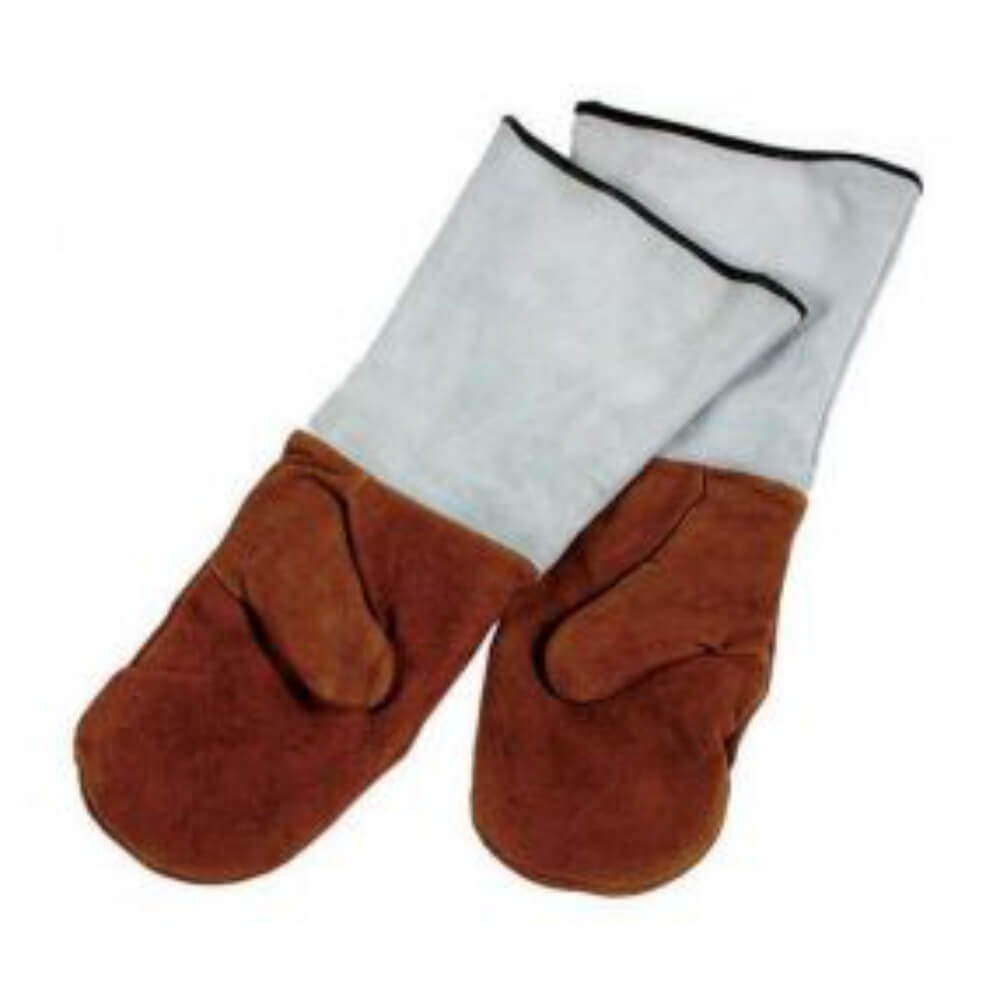
- Heat and molten spatter — welding, foundry work, hot components. The glove needs heat resistance, which is a completely different requirement from cut resistance.
- Puncture — nails, wire ends, splinters.
- Chemical exposure — solvents, oils, acids. Usually a coated or rubber glove rather than leather.
- Electrical risk — this is a specialist category with voltage-class testing, and leather is not an insulator for that purpose.
- Cold — outdoor winter work, cold stores.
- Vibration — prolonged use of powered tools, where anti-vibration padding matters.
Only after the hazard is named does the material question have a correct answer. A buyer who specifies the hazard gets a glove that works; a buyer who specifies a material often gets a complaint from the shop floor three weeks later.
## The Leather Families and What Each One Does Well
Leather remains the default material for mechanical protection because it combines abrasion resistance, puncture resistance and heat resistance with enough flexibility to work in. But “leather” is not one material. The differences matter commercially.
Full-grain cowhide is the outermost layer of the hide with the grain intact. It is the toughest option for abrasion and general abuse, and it is the standard choice for heavy handling and rigging work. It is thick, durable and not especially supple.
Split cowhide is the lower layer of the hide after the grain has been separated. It has no natural grain, but it is fibrous, thick-feeling and naturally highly heat resistant. This is why split leather dominates in welding gloves — it is not a cheaper substitute for the job, it is the technically correct material.
Goatskin has a tight fibre structure with excellent strength relative to thickness. It is supple, grips well in dry and oily conditions, and gives the dexterity needed for assembly and mechanics work. In practice goatskin frequently outlasts sheepskin several times over in the same application, which often makes it better value despite a higher unit cost.
Sheepskin and lambskin are the softest and finest-grained, giving the closest and most comfortable fit. They suit driver gloves, dress gloves, golf gloves and fine handling. They are the wrong choice for heavy-duty work because their abrasion resistance is limited.
Pigskin is breathable and soft with a distinctive porous grain, common in driver and general-purpose gloves, and comfortable in warm conditions.
Buffalo is dense and durable with a coarser grain, used in heavier leather goods.
A practical rule for buyers: match the material to the dominant hazard, not to the price list. Goatskin for dexterity and general industrial handling, split cowhide for heat, full-grain cowhide for abrasion, sheepskin for fine fit and comfort.
## Coatings and Linings: The Second Layer of Specification
Many industrial gloves are not just leather. They combine a leather or knit shell with a coating or a liner, and those choices change performance significantly.
Palm coatings — nitrile, PU, latex and nitrile-sandy finishes — improve grip and oil resistance. A nitrile-coated palm performs very differently from an uncoated one in wet or oily conditions.
Linings — unlined for maximum feel, fleece or thermal for cold climates, and cut-resistant liners (aramid, HPPE) bonded inside for cut hazards. A cut-resistant liner inside a leather shell is a common combination for glass and sheet-metal handling.
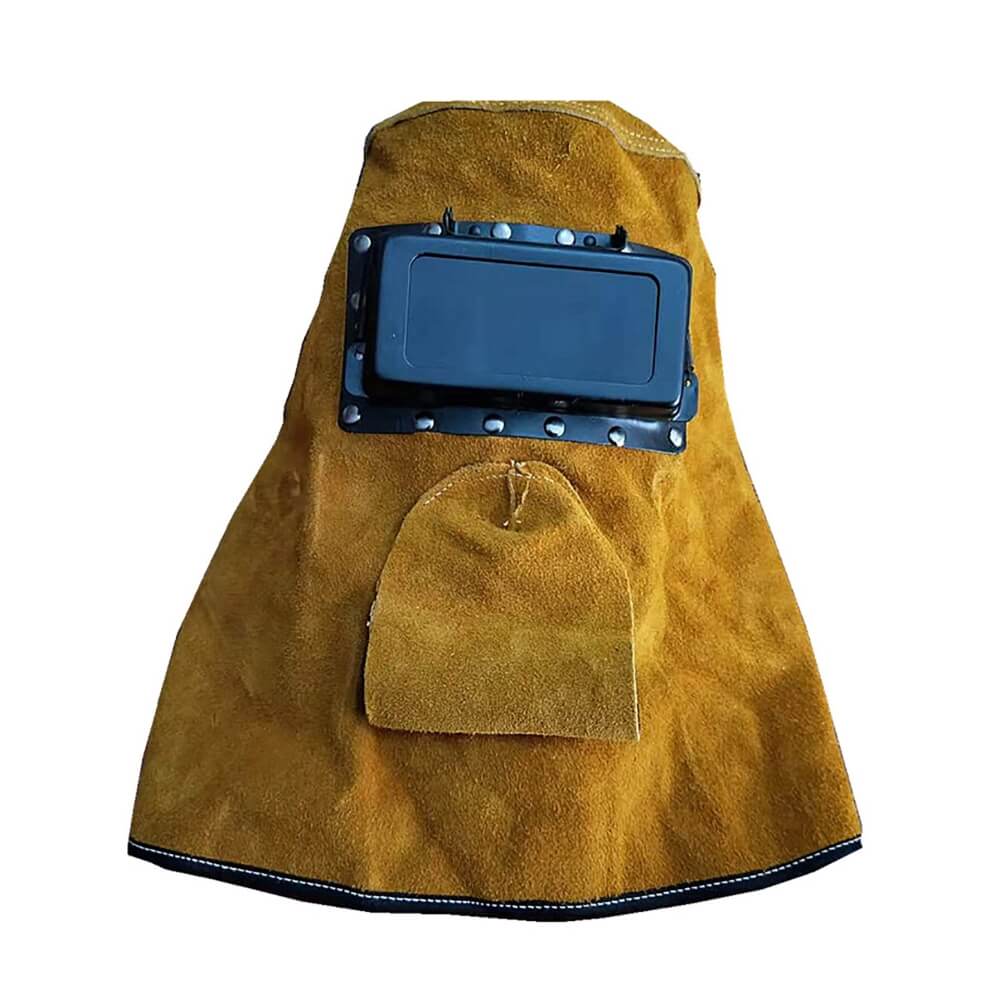
Cuffs — knit wrist for a snug fit and debris exclusion, safety cuff for easy removal and wrist protection, and gauntlet cuff for forearm protection against spatter and sparks. For welding, gauntlet cuffs are usually essential.
Closures — elastic, hook-and-loop, or open. A secure closure keeps the glove in place and directly affects both safety and wear life.
## Understanding EN388, EN407 and EN420
This is where a buyer moves from opinion to evidence. Three standards cover most industrial gloves.
EN388 measures mechanical risk on four scales: abrasion (1–4), blade cut (1–5 under the Coupe test, or A–F under the newer ISO 13997 test), tear (1–4) and puncture (1–4). A marking such as `EN388 4121` means abrasion 4, cut 1, tear 2, puncture 1 — an abrasion-resistant glove with modest cut protection. A marking such as `EN388 4544` describes a much tougher product. Always insist the standard is quoted with its year of publication, for example EN388:2016+A1:2018, because the test method changed and an unversioned reference is a warning sign.
EN407 covers thermal protection across six performance levels: flammability, contact heat, convective heat, radiant heat, small splashes of molten metal, and large quantities of molten metal. For any welding or hot-work glove, EN407 is the standard that actually matters, and it is the number you should compare between suppliers.
EN420 sets the general requirements — sizing, marking and innocuousness — and underpins the others.
CE marking under EU 2016/425 is the legal conformity system. Most industrial gloves are Category II and require EU type-examination by a Notified Body; welding and heat-resistant gloves typically fall into Category III, which adds ongoing Notified Body surveillance. A CE mark without a named Notified Body and an accredited-laboratory test report is a decoration, not a certification.
For workwear programmes, the same discipline applies with different standards: EN ISO 20471 for high visibility, EN ISO 11612 for heat and flame, EN ISO 11611 for welding protective clothing, and ANSI/ISEA 107 and NFPA 2112 for the North American market.
## Fit and Comfort Decide Whether the Glove Actually Gets Worn
A glove that is uncomfortable is removed within an hour, and a removed glove protects nobody. This is a safety factor, not a comfort nicety, and it is the reason procurement should never buy on price alone.
Consider four things:
Size range and grading. Workers whose hands fall between sizes will choose the wrong size. Ordering a proper graded set — not just medium and large — measurably improves compliance. Ask for a measurement spec sheet across the size range before bulk.
Palm width versus finger length. A glove with the right palm width but short fingers restricts grip; the wrong proportions cause fatigue.
Breathability. In warm environments, an unlined glove can saturate and cause skin problems. A breathable back panel or a moisture-managing liner changes the working experience.
Ease of removal. A glove that is hard to get off gets left off. Safety cuffs and hook-and-loop closures exist precisely for this reason, particularly where gloves are removed frequently to handle small parts.
## Sourcing From Pakistan: What to Verify Before You Order
Sialkot is one of the densest leather-goods manufacturing clusters in the world, which makes it genuinely competitive on landed cost. The density also means trading offices sit beside real factories, so verification matters.
Six checks before you commit:
- 1. Are they a manufacturer? Ask for a live video tour of the cutting and stitching floor, and ask how many machines they operate. A trader will stall or show a warehouse.
- 2. Which standards can they test to, and with which accredited laboratory? Vague answers mean no real testing.
- 3. What is the actual MOQ, and what is the reorder MOQ? Reorder minimums should be lower for an established account.
- 4. What is the defect rate and inspection standard? AQL 2.5 is the industry default; ask what happens when a lot fails.
- 5. Will they accept third-party inspection? SGS, BV or Intertek attendance before shipment is the cheapest insurance available. A refusal is disqualifying.
- 6. What documentation comes with the order? Test reports with lab identification, Declaration of Conformity, Technical File support, certificate of origin and the correct HS code.
## Building a Practical Glove Programme
Rather than buying one glove type for everybody, most distributors and industrial buyers are better served by a small mixed programme:
- A general-duty driver glove in goatskin or pigskin for handling, logistics and driving tasks.
- A cut-resistant mechanics or assembly glove with a reinforced palm for maintenance and light assembly.
- A certified welding glove in split cowhide with Kevlar stitching for hot work.
- A high-dexterity assembly glove for small-parts work where feel matters more than abrasion resistance.
Standardise sizing, labelling and branding across the range so your own catalogue stays clean, and standardise the packaging so cartons can be consolidated. Then negotiate volume across the range rather than per line, which is what lets a mid-sized buyer reach a volume tier.
## Frequently Asked Questions
Q: What is the most important factor when choosing safety gloves? The hazard. Identify whether the dominant risk is abrasion, cut, heat, puncture, chemical or cold, and specify the material and standard to match it. Choosing by product category rather than by hazard is the most common error.
Q: What does EN388 3121 mean? It is the four-digit performance rating: abrasion 3, blade cut 1, tear 2 and puncture 1. Higher numbers mean higher resistance on each scale.
Q: Do leather gloves protect against cuts? Leather provides some cut resistance, especially full-grain cowhide, but for serious cut hazards you need a dedicated cut-resistant liner rated to EN388 cut level, not leather alone.
Q: Which glove is best for welding? A split cowhide glove with Kevlar stitching and a gauntlet cuff, tested to EN407. Heat resistance, not abrasion resistance, is the governing requirement.
Q: What is the minimum order for custom logo gloves? Typically 100 pairs per style, with tiered pricing from 500 pairs.
Q: Can you supply CE test reports for export? Yes — accredited-laboratory test reports for EN388 and EN407, with Declaration of Conformity and Technical File support, and we welcome third-party inspection before shipment.
Q: How long does production take for a bulk glove order? Usually 25–40 days from order confirmation, depending on quantity, material and customisation.
Q: Do you offer OEM and private label? Yes — your logo, brand patch, size labels, hang tag, barcode and packaging, packed to your warehouse or retail specification.
Need help matching a glove to a hazard? Send us the application, the standard you need and the quantity, and our export team will recommend the correct material and construction with pricing and lead time within 24–48 hours. Request a quote, or browse our industrial leather gloves, welding gloves and assembly gloves ranges.